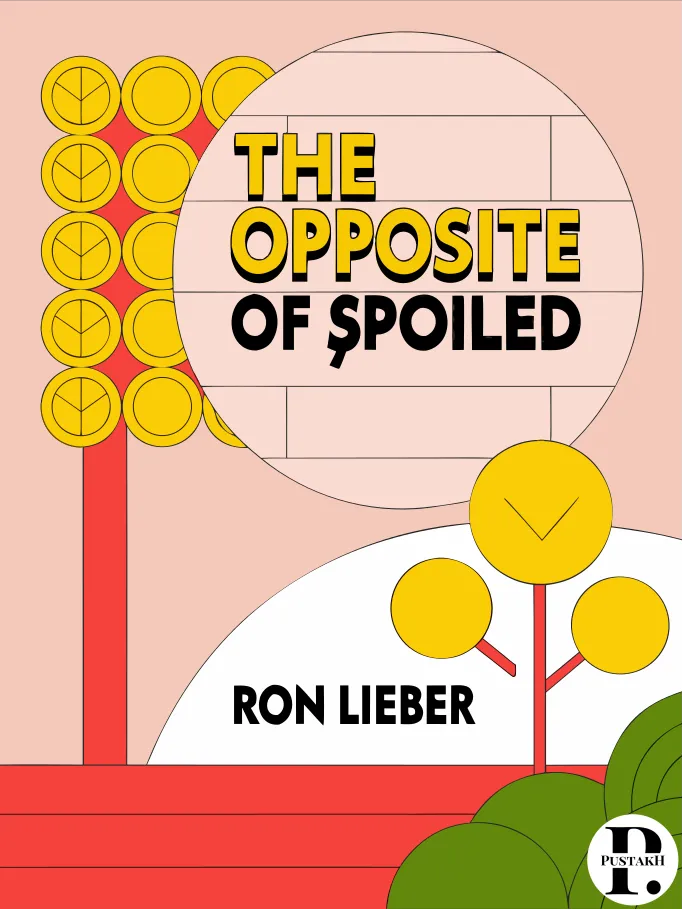
The Opposite of Spoiled
by Ron Lieber
Raising Kids Who Are Grounded, Generous, and Smart About Money
9
Chapters
68+
Action steps
13
Minutes
PERSONALIZED
Action steps tailored to your goals in the Pustakh app
Preview — Chapter 01: Why We Need to Talk About Money
Most parents fear that money conversations will turn their kids materialistic. The truth is the opposite, avoiding the subject leaves kids more curious, more confused, and more likely to form unhealthy ideas about wealth. Children notice everything: the cars we drive, the vacations we take, and the tension around bills. When parents stay silent, kids fill the gaps with their own interpretations. Talking about money demystifies it and humanizes it. It shows children that money is a tool for choices, not a measure of worth. Open discussions help kids understand that not everyone starts with the same resources, and that privilege comes with responsibility. Conversations around spending and saving can spark gratitude, especially when paired with transparency about effort, how hard it is to earn money and how quickly it can disappear. Instead of shielding kids from financial stress, wise parents share age-appropriate truths. This builds resilience, not entitlement. Parents who model honesty about money also create psychological safety. When kids know they can ask questions without judgment, they grow more curious about the mechanics of earning, budgeting, and giving. They start linking financial choices to values, seeing that generosity, patience, and fairness matter as much as success. The message becomes clear: we talk about money because we care about meaning, not materialism. When families normalize financial conversation, they raise children who understand both privilege and purpose. Money becomes an avenue for empathy, not just a number on a screen, but a story about effort, opportunity, and stewardship.
Keep reading on PustakhYou've read the opening. Here's where it gets practical.
The remaining 8 chapters, the full audio summary, and 68+ action steps personalized to your goals unlock with a free 3-day trial.
Start free 3-day trialNo credit card required · Cancel anytime
The Opposite of Spoiled summary — FAQ
What will I get from the The Opposite of Spoiled summary on Pustakh?
The key ideas of "The Opposite of Spoiled" by Ron Lieber, distilled into a roughly 15-minute read across 9 chapters, plus 68+ personalized action steps built around your goals and an optional audio version.
How long does the The Opposite of Spoiled summary take?
About 13 minutes to read the full summary on Pustakh, or you can listen to the audio version.
Does The Opposite of Spoiled have an audio summary?
Select Pustakh titles include audio summaries you can play in your browser, and new audio titles are added every week.
Is the The Opposite of Spoiled summary free?
You can read the introduction to "The Opposite of Spoiled" for free. Full access to every chapter and your personalized action steps is included with a Pustakh subscription. New accounts start with a free 3-day trial — no credit card required.
More Parenting Essentials summaries
View all
Best Friends, Worst Enemies
by Michael Thompson, Catherine O’Neill Grace, & Lawrence J. Cohen
Brain-Body Parenting
by Mona Delahooke
Calm Parents, Happy Kids
by Laura Markham
Doing Life with Your Adult Children
by Jim Burns
Einstein Never Used Flash Cards
by Kathy Hirsh-Pasek, Roberta Michnick Golinkoff, Diane Eyer
Gentle Discipline
by Sarah Ockwell-Smith
68+ action steps from The Opposite of Spoiled, tailored to your goals in Pustakh
- Tailored to your context and what you are working on
- Personalized steps per chapter, not generic checklists
- Read and listen on your schedule—then act with clarity
- Unlock the full library with a simple subscription
We'll set it up as we learn what you're working on.