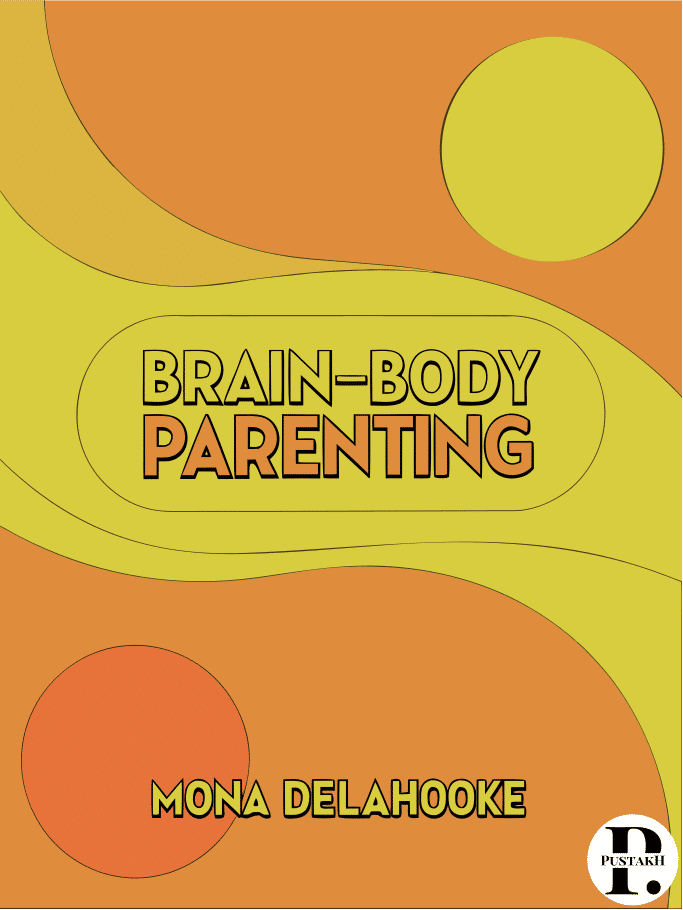
Brain-Body Parenting
by Mona Delahooke
How to Stop Managing Behavior and Start Raising Joyful, Resilient Kids
10
Chapters
83+
Action steps
15
Minutes
PERSONALIZED
Action steps tailored to your goals in the Pustakh app
Preview — Chapter 01: How to Understand Your Child’s Physiology - and Why It’s Important
When a child acts out, most people zoom straight in on the behavior. But this lens misses the deeper story unfolding inside the brain and body. Every emotion, reaction, meltdown, or withdrawal is shaped by physiology - by the wiring that helps a child determine: “Am I safe right now?” Once you understand this inner process, everything starts making sense in a way that behavior charts and consequences never could. Children rely heavily on signals from their bodies to respond to the world. Their nervous systems act like an internal alarm system, reacting to sensory input, stressors, and uncertainty. Sometimes the alarm is accurate. Sometimes it’s overly sensitive. Either way, the reaction is real. When adults misinterpret these responses as intentional misbehavior, the child ends up feeling unseen, misunderstood, and even more dysregulated. This shifts when you begin viewing cues - fidgeting, irritability, impulsivity, freezing, or crying - as signs the body is overloaded rather than signs of defiance. Suddenly you’re not fighting against your child; you’re supporting them through a storm their body can’t yet handle. This perspective instantly softens the dynamic. You become more patient, more attuned, and more effective. Physiology-first parenting reframes emotional reactions as adaptive responses. If a child senses threat - whether physical, emotional, or social - their system ramps up protectively. Their brain isn’t asking, “How should I behave?” It’s asking, “How do I survive this moment?” That changes everything. From here, connection becomes the starting point. Warm eye contact, a gentle tone, and a calm presence tell the child’s body, “You’re safe with me.” Once safety lands, behavior naturally shifts because the nervous system isn’t screaming for protection anymore. With repeated experience of this kind of support, children develop stronger internal resources that help them recover faster from stress. Over time, they learn to tune into their own signals, name their emotions, and build confidence in their ability to return to balance. This creates the groundwork for resilience - something that doesn’t emerge from pressure but from being understood.
Keep reading on PustakhYou've read the opening. Here's where it gets practical.
The remaining 9 chapters, the full audio summary, and 83+ action steps personalized to your goals unlock with a free 3-day trial.
Start free 3-day trialNo credit card required · Cancel anytime
Brain-Body Parenting summary — FAQ
What will I get from the Brain-Body Parenting summary on Pustakh?
The key ideas of "Brain-Body Parenting" by Mona Delahooke, distilled into a roughly 15-minute read across 10 chapters, plus 83+ personalized action steps built around your goals and an optional audio version.
How long does the Brain-Body Parenting summary take?
About 15 minutes to read the full summary on Pustakh, or you can listen to the audio version.
Does Brain-Body Parenting have an audio summary?
Select Pustakh titles include audio summaries you can play in your browser, and new audio titles are added every week.
Is the Brain-Body Parenting summary free?
You can read the introduction to "Brain-Body Parenting" for free. Full access to every chapter and your personalized action steps is included with a Pustakh subscription. New accounts start with a free 3-day trial — no credit card required.
More Parenting Essentials summaries
View all
Best Friends, Worst Enemies
by Michael Thompson, Catherine O’Neill Grace, & Lawrence J. Cohen
Calm Parents, Happy Kids
by Laura Markham
Doing Life with Your Adult Children
by Jim Burns
Einstein Never Used Flash Cards
by Kathy Hirsh-Pasek, Roberta Michnick Golinkoff, Diane Eyer
Gentle Discipline
by Sarah Ockwell-Smith
Good Inside
by Dr. Becky Kennedy
83+ action steps from Brain-Body Parenting, tailored to your goals in Pustakh
- Tailored to your context and what you are working on
- Personalized steps per chapter, not generic checklists
- Read and listen on your schedule—then act with clarity
- Unlock the full library with a simple subscription
We'll set it up as we learn what you're working on.