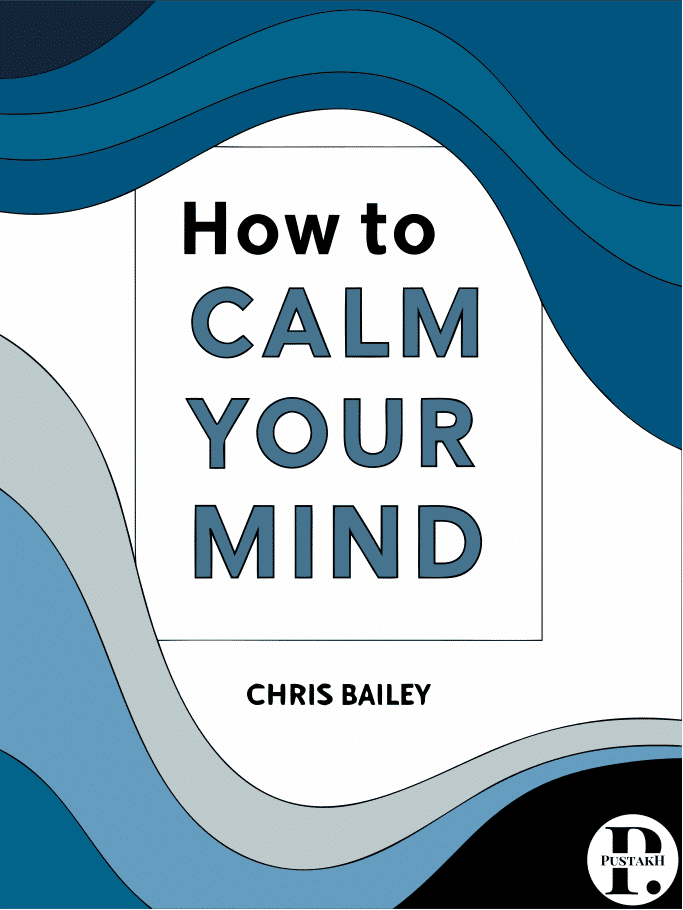
How to Calm Your Mind
by Chris Bailey
Finding Peace and Productivity in Anxious Times
8
Chapters
63+
Action steps
10
Minutes
PERSONALIZED
Action steps tailored to your goals in the Pustakh app
Preview — Chapter 01: The Opposite of Calm
The opposite of calm is not stress alone, but continuous mental agitation. This agitation comes from an overload of inputs combined with an internal drive to do more, be more, and keep up. The mind becomes busy even when the body is still. This state is characterized by constant background noise. Thoughts race ahead to future tasks or replay past interactions. Silence feels unsettling because the mind has grown accustomed to stimulation. Calm begins to feel foreign. The consequences of this mental state are subtle but serious. Attention fragments. Emotional reactions intensify. Small challenges feel overwhelming. The mind becomes less capable of sustained focus or deep reflection. The environment plays a significant role. Devices, platforms, and systems are designed to capture attention rather than protect it. Over time, the mind adapts to this pace, expecting constant novelty and reward. Understanding the opposite of calm creates awareness. When agitation is recognized as a learned state rather than a personal flaw, it becomes possible to interrupt it intentionally.
Keep reading on PustakhYou've read the opening. Here's where it gets practical.
The remaining 7 chapters, the full audio summary, and 63+ action steps personalized to your goals unlock with a free 3-day trial.
Start free 3-day trialNo credit card required · Cancel anytime
How to Calm Your Mind summary — FAQ
What will I get from the How to Calm Your Mind summary on Pustakh?
The key ideas of "How to Calm Your Mind" by Chris Bailey, distilled into a roughly 15-minute read across 8 chapters, plus 63+ personalized action steps built around your goals and an optional audio version.
How long does the How to Calm Your Mind summary take?
About 10 minutes to read the full summary on Pustakh, or you can listen to the audio version.
Does How to Calm Your Mind have an audio summary?
Select Pustakh titles include audio summaries you can play in your browser, and new audio titles are added every week.
Is the How to Calm Your Mind summary free?
You can read the introduction to "How to Calm Your Mind" for free. Full access to every chapter and your personalized action steps is included with a Pustakh subscription. New accounts start with a free 3-day trial — no credit card required.
More Health & Wellness summaries
View all

63+ action steps from How to Calm Your Mind, tailored to your goals in Pustakh
- Tailored to your context and what you are working on
- Personalized steps per chapter, not generic checklists
- Read and listen on your schedule—then act with clarity
- Unlock the full library with a simple subscription
We'll set it up as we learn what you're working on.