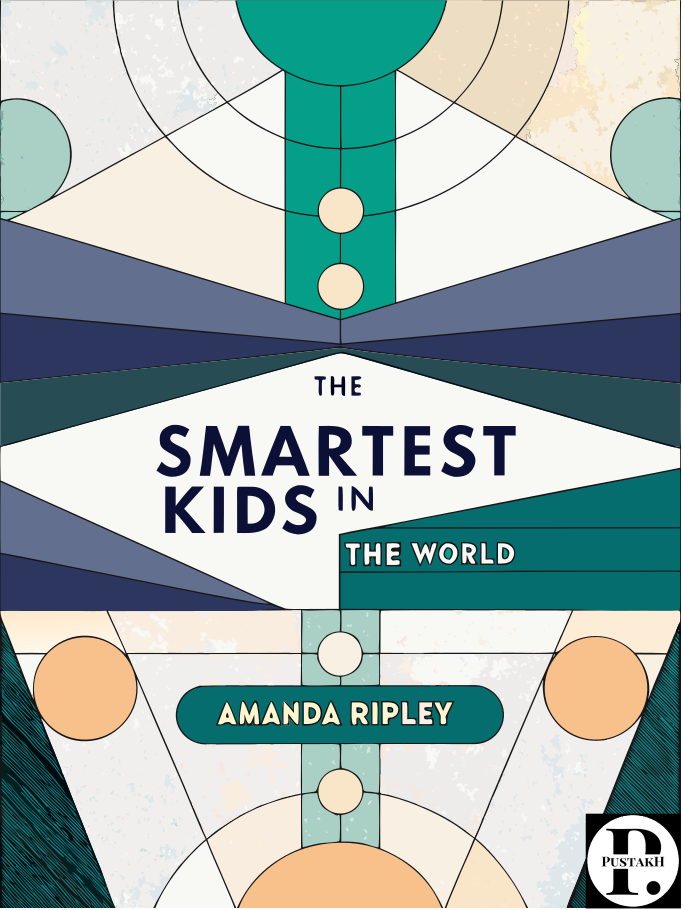
The Smartest Kids in the World
by Amanda Ripley
The Smartest Kids And How They Got That Way
10
Chapters
76+
Action steps
15
Minutes
PERSONALIZED
Action steps tailored to your goals in the Pustakh app
Preview — Chapter 01: The Treasure Map
The journey begins with a sense of discovery - not of places, but of patterns. You’re guided through observations of how the world’s strongest learning cultures didn’t stumble into success. They built it piece by piece, through deliberate choices and deeply rooted expectations. The idea feels empowering because it suggests that excellence is accessible; it doesn’t require magic, only commitment. Families, teachers, and communities all play a part, creating an environment where kids grow up believing effort is normal, struggle is expected, and learning matters. One theme that repeatedly stands out is the role of expectations. When children are surrounded by adults who take learning seriously, they absorb that seriousness without needing motivational speeches or constant rewards. Effort becomes part of daily life, not an exceptional event. You start realizing how much of education depends not on resources or technology, but on the simple, powerful belief that kids can handle meaningful work. In places where adults hold this belief, students rise naturally. In places where adults expect less, students quietly shrink to match the environment. Another thread woven into the narrative is stability. High-performing countries build systems designed to last. Teachers receive strong preparation, families reinforce habits at home, and schools provide consistency rather than chaos. That stability becomes the foundation on which children learn to trust themselves. When expectations don’t shift constantly and routines aren’t disrupted, young people develop discipline almost effortlessly. They know what good work looks like, and they’re encouraged to reach for it. The treasure map metaphor becomes clearer as you observe pattern after pattern in different countries. There is no single treasure chest waiting at the end - instead, there are countless small “markers” along the journey: respect for teachers, consistent routines, rigorous materials, and a culture that treats learning like a shared responsibility. Together, these markers point toward a mindset that could be replicated anywhere with enough dedication. By the end, you begin to see learning systems less as fixed structures and more as living organisms. They grow, adapt, and flourish when the adults shaping them believe deeply in the potential of young people. The treasure, it turns out, isn’t a destination - it’s the collective attitude that builds strong learners from the inside out.
Keep reading on PustakhYou've read the opening. Here's where it gets practical.
The remaining 9 chapters, the full audio summary, and 76+ action steps personalized to your goals unlock with a free 3-day trial.
Start free 3-day trialNo credit card required · Cancel anytime
The Smartest Kids in the World summary — FAQ
What will I get from the The Smartest Kids in the World summary on Pustakh?
The key ideas of "The Smartest Kids in the World" by Amanda Ripley, distilled into a roughly 15-minute read across 10 chapters, plus 76+ personalized action steps built around your goals and an optional audio version.
How long does the The Smartest Kids in the World summary take?
About 15 minutes to read the full summary on Pustakh, or you can listen to the audio version.
Does The Smartest Kids in the World have an audio summary?
Yes. "The Smartest Kids in the World" includes an audio summary you can listen to directly in your browser — no separate app required.
Is the The Smartest Kids in the World summary free?
You can read the introduction to "The Smartest Kids in the World" for free. Full access to every chapter and your personalized action steps is included with a Pustakh subscription. New accounts start with a free 3-day trial — no credit card required.
More Kids & Growth summaries
View all
Being You
by Catharine Hannay
Do Hard Things
by Alex & Brett Harris
Just As You Are
by Michelle Skeen & Kelly Skeen
Mindsets in the Classroom
by Mary Cay Ricci

The 6 Most Important Decisions You'll Ever Make
by Sean Covey
The 7 Habits of Happy Kids
by Sean Covey
76+ action steps from The Smartest Kids in the World, tailored to your goals in Pustakh
- Tailored to your context and what you are working on
- Personalized steps per chapter, not generic checklists
- Read and listen on your schedule—then act with clarity
- Unlock the full library with a simple subscription
We'll set it up as we learn what you're working on.