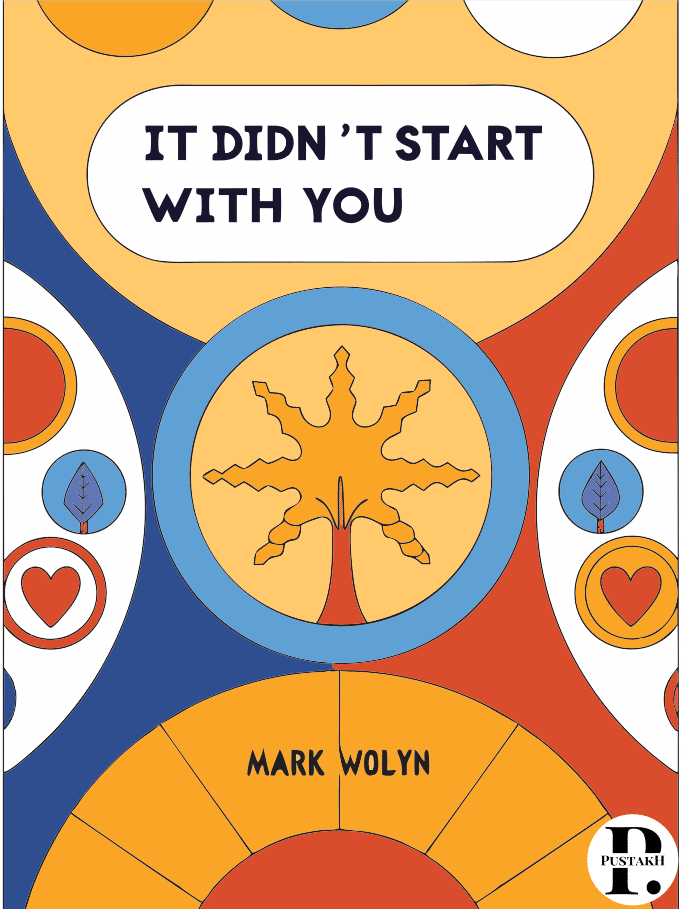
It Didn't Start with You
by Mark Wolynn
How Inherited Family Trauma Shapes Who We Are And How To End The Cycle
14
Chapters
106+
Action steps
18
Minutes
PERSONALIZED
Action steps tailored to your goals in the Pustakh app
Preview — Chapter 01: Traumas Lost and Found
Trauma doesn’t simply vanish when it goes unacknowledged; it finds new ways to resurface. Often, it shows up in the lives of later generations, disguised as symptoms, fears, or self-defeating behaviors. A grandchild might carry the grief of a war-torn grandfather or the anxiety of a grandmother who lost a child. These echoes can appear without any conscious awareness of the original event, leaving people puzzled as to why they feel the way they do. What seems like a personal struggle may, in fact, be the continuation of a family story that was never resolved. One striking aspect of inherited trauma is how it bypasses memory. You don’t need to know the story for its effects to shape your life. For example, a person with an unexplained fear of water may later discover that a relative drowned. Someone who avoids intimacy might be echoing the heartbreak of an ancestor abandoned by their partner. These connections, once uncovered, often bring a sense of profound relief: “Now it makes sense.” The symptoms are not random, nor are they proof of being broken. They are signals, pointing back to the unfinished pain of the family system. But the chapter doesn’t stop at explaining how trauma travels; it also offers hope. Just as trauma can be inherited, so can healing. When we identify the origins of these echoes, we can begin to release them. This involves acknowledging the suffering that was hidden or denied, often giving voice to what could never be spoken. By doing so, we create space for integration. The legacy of pain no longer dominates but becomes part of a larger story that includes resilience, survival, and love. Another powerful idea here is that the family system itself seeks balance. When something traumatic happens and remains unhealed, it doesn’t simply disappear - it looks for expression in later generations. In this sense, descendants act as carriers of unfinished business, not out of punishment but out of loyalty and love. Once recognized, this loyalty can be transformed. Instead of carrying the pain, we can honor it, release it, and live differently. Traumas lost and then found again become opportunities, not curses - moments where awareness can finally break the cycle and set future generations free.
Keep reading on PustakhYou've read the opening. Here's where it gets practical.
The remaining 13 chapters, the full audio summary, and 106+ action steps personalized to your goals unlock with a free 3-day trial.
Start free 3-day trialNo credit card required · Cancel anytime
It Didn't Start with You summary — FAQ
What will I get from the It Didn't Start with You summary on Pustakh?
The key ideas of "It Didn't Start with You" by Mark Wolynn, distilled into a roughly 15-minute read across 14 chapters, plus 106+ personalized action steps built around your goals and an optional audio version.
How long does the It Didn't Start with You summary take?
About 18 minutes to read the full summary on Pustakh, or you can listen to the audio version.
Does It Didn't Start with You have an audio summary?
Select Pustakh titles include audio summaries you can play in your browser, and new audio titles are added every week.
Is the It Didn't Start with You summary free?
You can read the introduction to "It Didn't Start with You" for free. Full access to every chapter and your personalized action steps is included with a Pustakh subscription. New accounts start with a free 3-day trial — no credit card required.
More Healing & Recovery summaries
View all
Adult Children of Emotionally Immature Parents
by Lindsay C. Gibson
Are You Mad At Me?
by Meg Josephson
Broken Heart, Shared Heart, Healing Heart
by Barbara Allen
Can't Even
by Anne Helen Petersen
Codependent No More
by Melody Beattie
Cured
by Jeffrey Rediger
106+ action steps from It Didn't Start with You, tailored to your goals in Pustakh
- Tailored to your context and what you are working on
- Personalized steps per chapter, not generic checklists
- Read and listen on your schedule—then act with clarity
- Unlock the full library with a simple subscription
We'll set it up as we learn what you're working on.