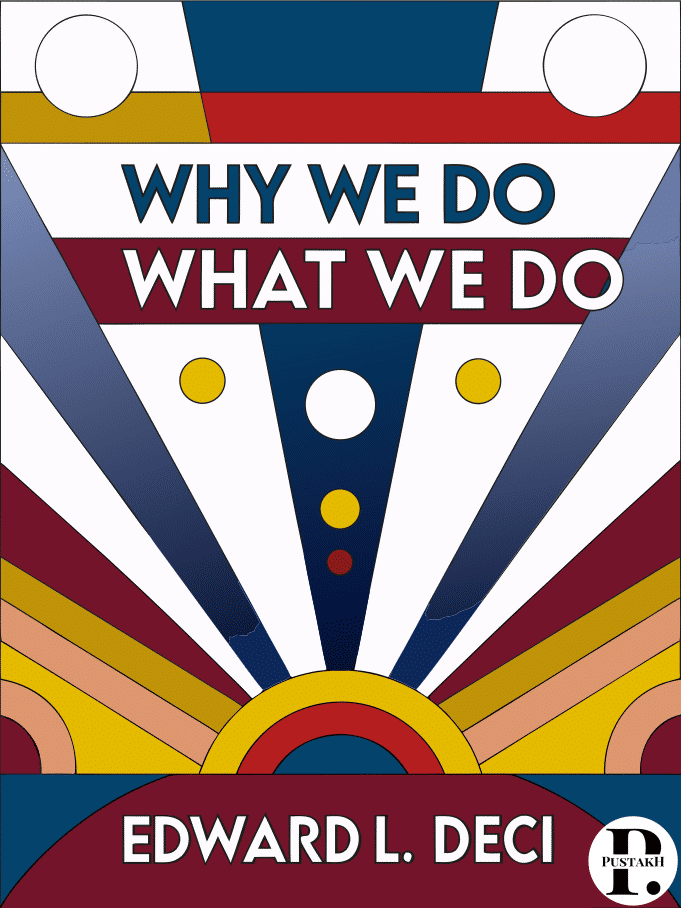
Why We Do What We Do
by Edward L. Deci
Understanding Self-Motivation
12
Chapters
99+
Action steps
15
Minutes
PERSONALIZED
Action steps tailored to your goals in the Pustakh app
Preview — Chapter 01: Authority and Its Discontents
Authority is woven into nearly every social structure. Parents guide children, managers direct teams, teachers set expectations, and institutions establish rules. Yet authority carries a hidden tension. When exercised through control rather than guidance, it quietly undermines motivation, creativity, and trust. This exploration reveals how authority often relies on compliance as a proxy for success. If people follow instructions, the system assumes it is working. But beneath outward obedience, something subtler unfolds. People begin to disengage internally. They do what is required, not what is meaningful. Initiative shrinks. Responsibility shifts outward. Control-based authority does not eliminate motivation; it transforms it into something brittle and conditional. Actions become dependent on surveillance, approval, or fear of consequences. When the authority figure disappears, so does the drive to act. What makes this especially problematic is that controlling authority often masquerades as structure, efficiency, or even care. Tight rules are justified as necessary. Pressure is framed as motivation. Yet research repeatedly shows that when individuals feel coerced, their performance, learning, and well-being suffer. They may comply, but they stop investing themselves fully. The discussion also highlights how people internalize authority over time. External pressure becomes self-pressure. Guilt, shame, and conditional self-worth replace curiosity and intrinsic interest. Individuals may appear disciplined while silently struggling with anxiety or emotional exhaustion. Importantly, the narrative does not reject authority outright. Guidance, boundaries, and leadership are essential. The difference lies in how authority is expressed. Autonomy-supportive authority invites participation, explains reasons, acknowledges feelings, and allows choice within structure. This approach fosters internal commitment rather than surface-level obedience. The tension between authority and autonomy is not just a management issue; it is a human one. When people feel trusted, respected, and involved, they rise to responsibility. When they feel controlled, they retreat into minimal effort or quiet resistance. Understanding this distinction reframes leadership as a psychological relationship rather than a power hierarchy.
Keep reading on PustakhYou've read the opening. Here's where it gets practical.
The remaining 11 chapters, the full audio summary, and 99+ action steps personalized to your goals unlock with a free 3-day trial.
Start free 3-day trialNo credit card required · Cancel anytime
Why We Do What We Do summary — FAQ
What will I get from the Why We Do What We Do summary on Pustakh?
The key ideas of "Why We Do What We Do" by Edward L. Deci, distilled into a roughly 15-minute read across 12 chapters, plus 99+ personalized action steps built around your goals and an optional audio version.
How long does the Why We Do What We Do summary take?
About 15 minutes to read the full summary on Pustakh, or you can listen to the audio version.
Does Why We Do What We Do have an audio summary?
Select Pustakh titles include audio summaries you can play in your browser, and new audio titles are added every week.
Is the Why We Do What We Do summary free?
You can read the introduction to "Why We Do What We Do" for free. Full access to every chapter and your personalized action steps is included with a Pustakh subscription. New accounts start with a free 3-day trial — no credit card required.
More Mindset & Psychology summaries
View all


99+ action steps from Why We Do What We Do, tailored to your goals in Pustakh
- Tailored to your context and what you are working on
- Personalized steps per chapter, not generic checklists
- Read and listen on your schedule—then act with clarity
- Unlock the full library with a simple subscription
We'll set it up as we learn what you're working on.