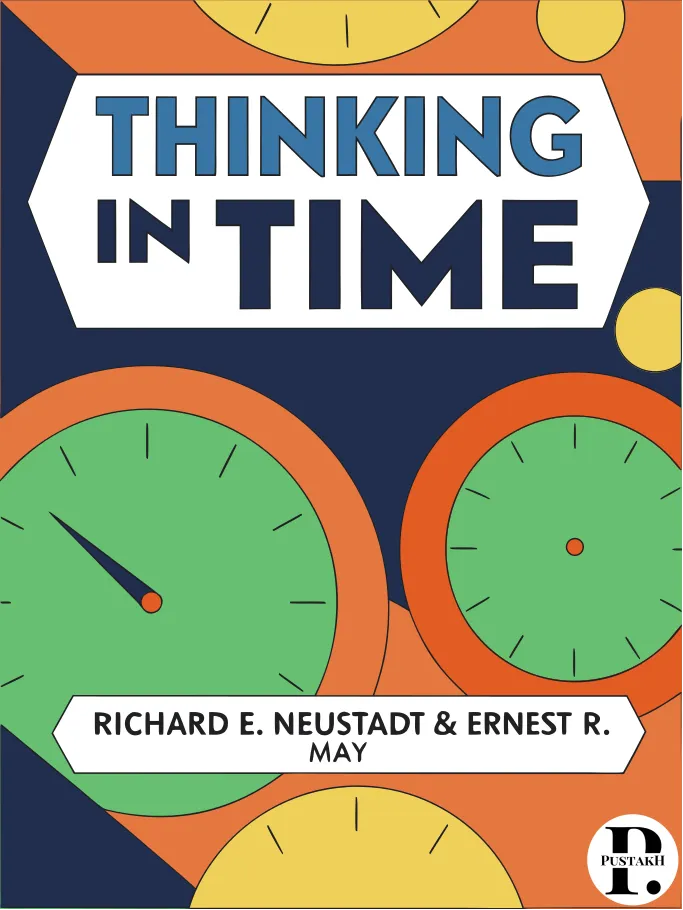
Thinking in Time
by Richard E. Neustadt & Ernest R. May
The Uses of History for Decision Makers
14
Chapters
89+
Action steps
15
Minutes
PERSONALIZED
Action steps tailored to your goals in the Pustakh app
Preview — Chapter 01: Success Story
This exploration centers on a high-stakes confrontation that is often remembered for its successful outcome. Instead of celebrating resolution, attention is directed toward how thinking unfolded under extreme pressure. What stands out immediately is restraint. Faced with intense demands for swift and forceful action, decision-makers resisted the urge to act decisively for appearance’s sake. The defining strength was patience paired with structure. Options were explored incrementally, allowing learning to occur before irreversible commitments were made. Each move created space to reassess assumptions and gather additional information. This sequencing reduced the risk of escalation while preserving flexibility. Disagreement played a productive role. Competing viewpoints were not suppressed in favor of unity. Instead, they were surfaced deliberately to expose blind spots and test confidence. Internal friction became a safeguard rather than a liability. By allowing skepticism to coexist with urgency, judgment remained grounded. Another critical feature was resistance to easy analogies. Instead of framing the situation as a replay of past disasters or triumphs, decision-makers examined the specific characteristics in front of them. Similarities were acknowledged without allowing them to dominate thinking. Differences were treated as signals rather than inconveniences. Timing mattered as much as substance. Pressure to appear strong could have driven immediate escalation, yet restraint preserved credibility and control. Each measured step communicated resolve without closing off alternatives. Strength was expressed through discipline rather than impulse. The deeper lesson lies in how success was constructed. It emerged from habits of mind that slowed reaction, demanded evidence, and preserved optionality. Judgment improved not through certainty, but through deliberate pacing and structured doubt.
Keep reading on PustakhYou've read the opening. Here's where it gets practical.
The remaining 13 chapters, the full audio summary, and 89+ action steps personalized to your goals unlock with a free 3-day trial.
Start free 3-day trialNo credit card required · Cancel anytime
Thinking in Time summary — FAQ
What will I get from the Thinking in Time summary on Pustakh?
The key ideas of "Thinking in Time" by Richard E. Neustadt & Ernest R. May, distilled into a roughly 15-minute read across 14 chapters, plus 89+ personalized action steps built around your goals and an optional audio version.
How long does the Thinking in Time summary take?
About 15 minutes to read the full summary on Pustakh, or you can listen to the audio version.
Does Thinking in Time have an audio summary?
Select Pustakh titles include audio summaries you can play in your browser, and new audio titles are added every week.
Is the Thinking in Time summary free?
You can read the introduction to "Thinking in Time" for free. Full access to every chapter and your personalized action steps is included with a Pustakh subscription. New accounts start with a free 3-day trial — no credit card required.
More Learning & Skill Development summaries
View all
12 Books That Changed the World
by Melvyn Bragg
21 Lessons for the 21st Century
by Yuval Noah Harari

Actionable Gamification
by Yu-kai Chou
A Mind for Numbers
by Barbara Oakley

A Short History of Nearly Everything
by Bill Bryson
Build, Don’t Talk
by Raj Shamani
89+ action steps from Thinking in Time, tailored to your goals in Pustakh
- Tailored to your context and what you are working on
- Personalized steps per chapter, not generic checklists
- Read and listen on your schedule—then act with clarity
- Unlock the full library with a simple subscription
We'll set it up as we learn what you're working on.