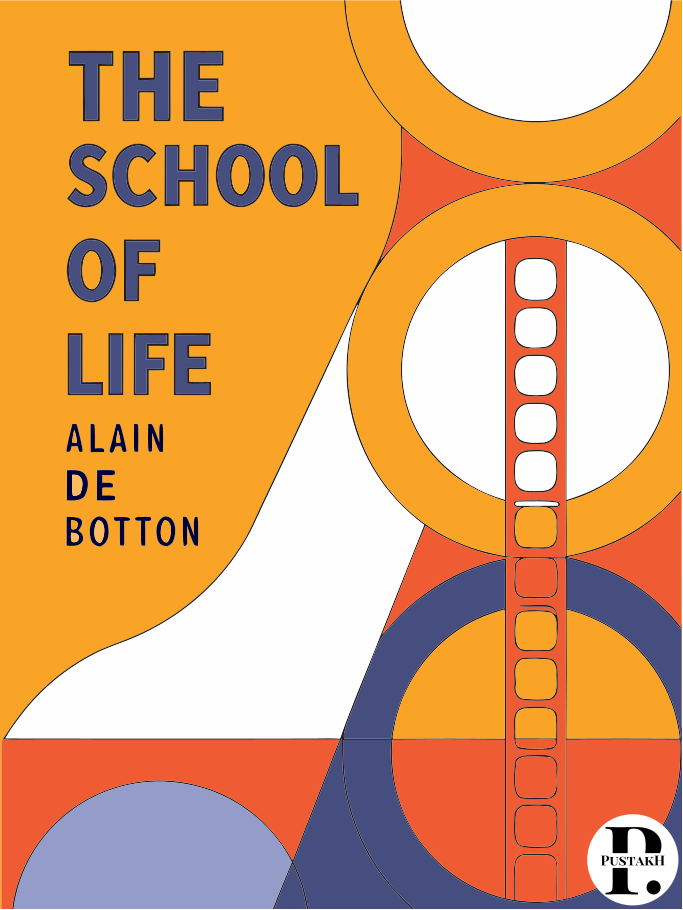
The School of Life
by Alain de Botton
An Emotional Education
5
Chapters
37+
Action steps
15
Minutes
PERSONALIZED
Action steps tailored to your goals in the Pustakh app
Preview — Chapter 01: Self
Self is where the emotional curriculum begins, because without understanding ourselves, it is nearly impossible to engage meaningfully with others or the wider world. The focus here is on developing the rare art of self-awareness. Many of us operate on autopilot, pushed and pulled by emotions we don’t quite understand. We may become angry at a small slight, withdraw when someone offers criticism, or chase achievements that fail to bring satisfaction. Beneath these patterns lie unexamined beliefs, childhood imprints, and hidden fears that quietly steer our lives. Self-knowledge is not about dissecting every thought with cold rationality; rather, it is about cultivating a compassionate curiosity toward our own inner workings. When we pause to ask, “Why did that affect me so strongly?” we start uncovering the narratives that run beneath the surface. Perhaps our defensiveness comes from a fear of abandonment, or our constant striving is rooted in a need to prove our worth. Recognizing these truths does not solve everything instantly, but it opens a path to gentler choices. Instead of being ruled by hidden scripts, we begin to rewrite them with intention. The lesson here is that maturity is not about controlling or suppressing our feelings, but about learning to interpret them accurately and respond with wisdom. Anxieties can point us toward unmet needs, envy can highlight values we long to cultivate, and sadness can serve as a reminder to slow down. Our emotions become guides rather than enemies. This process requires patience, after all, most of us have spent years avoiding uncomfortable truths about ourselves. But each step toward honesty strengthens resilience and deepens our ability to connect authentically with others. Another dimension explored here is the idea of self-compassion. We are often harsher on ourselves than we would ever be on a friend. Emotional education suggests reversing this imbalance by practicing gentleness with our own struggles. To recognize flaws without shame, to admit mistakes without collapse, and to accept imperfection as part of the human condition is to develop a sturdier sense of self. This does not lead to complacency; rather, it frees us to grow without the weight of constant self-criticism. Ultimately, the exploration of self is not about becoming flawless but about becoming more honest and forgiving with ourselves. In doing so, we step into a truer form of strength, one that acknowledges vulnerability as part of courage. This foundation is essential, because without it, every other aspect of emotional life, from love to work, rests on shaky ground.
Keep reading on PustakhYou've read the opening. Here's where it gets practical.
The remaining 4 chapters, the full audio summary, and 37+ action steps personalized to your goals unlock with a free 3-day trial.
Start free 3-day trialNo credit card required · Cancel anytime
The School of Life summary — FAQ
What will I get from the The School of Life summary on Pustakh?
The key ideas of "The School of Life" by Alain de Botton, distilled into a roughly 15-minute read across 5 chapters, plus 37+ personalized action steps built around your goals and an optional audio version.
How long does the The School of Life summary take?
About 15 minutes to read the full summary on Pustakh, or you can listen to the audio version.
Does The School of Life have an audio summary?
Select Pustakh titles include audio summaries you can play in your browser, and new audio titles are added every week.
Is the The School of Life summary free?
You can read the introduction to "The School of Life" for free. Full access to every chapter and your personalized action steps is included with a Pustakh subscription. New accounts start with a free 3-day trial — no credit card required.
More Personal Development summaries
View all

37+ action steps from The School of Life, tailored to your goals in Pustakh
- Tailored to your context and what you are working on
- Personalized steps per chapter, not generic checklists
- Read and listen on your schedule—then act with clarity
- Unlock the full library with a simple subscription
We'll set it up as we learn what you're working on.