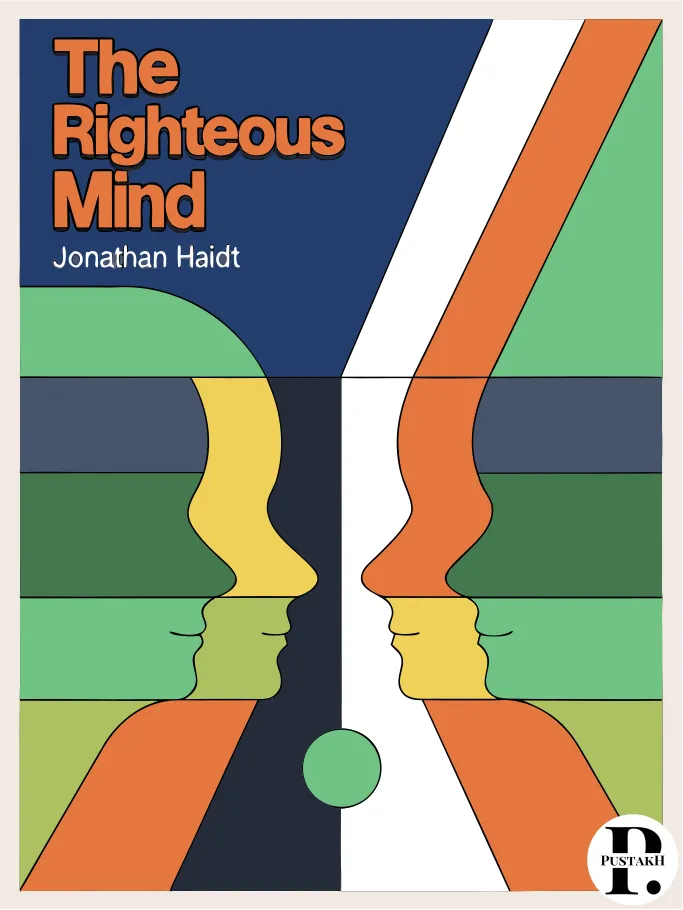
The Righteous Mind
by Jonathan Haidt
Why Good People Are Divided by Politics and Religion
12
Chapters
71+
Action steps
15
Minutes
PERSONALIZED
Action steps tailored to your goals in the Pustakh app
Preview — Chapter 01: Where Does Morality Come From?
Morality often feels learned through teaching, culture, or deliberate reflection. This exploration challenges that idea by tracing moral instincts back to human evolution. Long before laws or ethical systems existed, humans needed ways to cooperate, coordinate behavior, and survive together. Moral emotions emerged as psychological tools that made group life possible. Moral reactions are not invented by culture; they are shaped by evolution and refined by social life. Evidence from early childhood shows that humans display sensitivity to fairness, harm, and helpfulness before they can articulate moral rules. These reactions are felt, not reasoned. A crucial distinction appears between moral knowledge and moral motivation. Knowing what is right does not automatically lead to doing what is right. Moral emotions such as anger, compassion, admiration, and disgust supply the energy that moves people to act. Without emotion, morality remains abstract and inert. The discussion reframes morality as fundamentally social. Moral systems help groups function by encouraging cooperation and discouraging behaviors that threaten cohesion. Praise, blame, shame, and honor operate as signals that guide individuals toward group-approved behavior. This lens helps explain why moral violations provoke such strong reactions. When norms are broken, it feels as though the social fabric is being torn. Emotional responses are swift because they evolved to protect belonging and stability. Morality feels sacred because it is deeply tied to survival and connection. Recognizing this origin does not weaken moral conviction; it explains why moral disagreements feel so intense and why people struggle to remain neutral when values are at stake.
Keep reading on PustakhYou've read the opening. Here's where it gets practical.
The remaining 11 chapters, the full audio summary, and 71+ action steps personalized to your goals unlock with a free 3-day trial.
Start free 3-day trialNo credit card required · Cancel anytime
The Righteous Mind summary — FAQ
What will I get from the The Righteous Mind summary on Pustakh?
The key ideas of "The Righteous Mind" by Jonathan Haidt, distilled into a roughly 15-minute read across 12 chapters, plus 71+ personalized action steps built around your goals and an optional audio version.
How long does the The Righteous Mind summary take?
About 15 minutes to read the full summary on Pustakh, or you can listen to the audio version.
Does The Righteous Mind have an audio summary?
Select Pustakh titles include audio summaries you can play in your browser, and new audio titles are added every week.
Is the The Righteous Mind summary free?
You can read the introduction to "The Righteous Mind" for free. Full access to every chapter and your personalized action steps is included with a Pustakh subscription. New accounts start with a free 3-day trial — no credit card required.
More Relationships & Social Skills summaries
View all
71+ action steps from The Righteous Mind, tailored to your goals in Pustakh
- Tailored to your context and what you are working on
- Personalized steps per chapter, not generic checklists
- Read and listen on your schedule—then act with clarity
- Unlock the full library with a simple subscription
We'll set it up as we learn what you're working on.