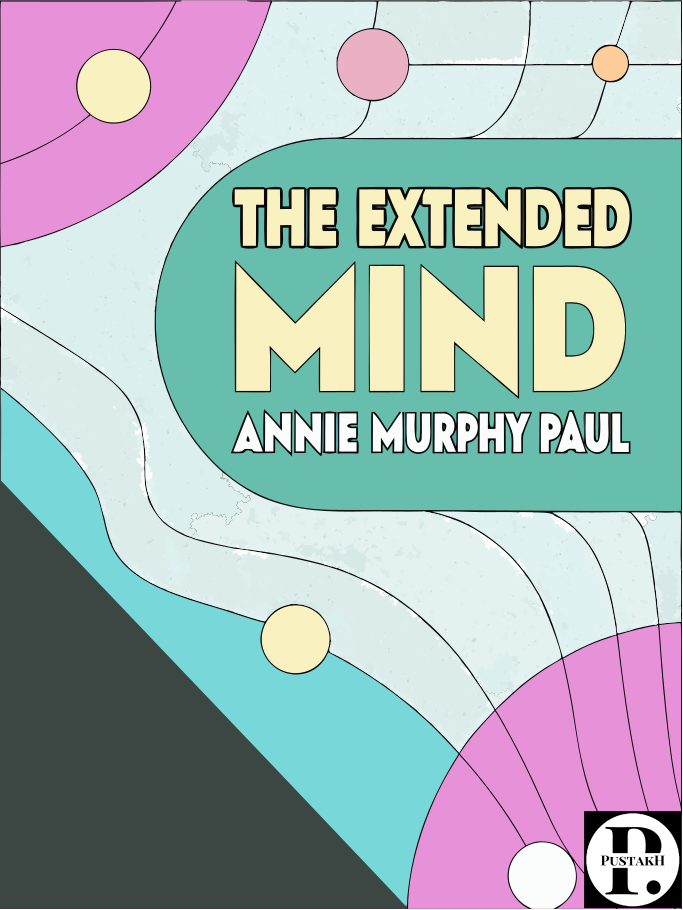
The Extended Mind
by Annie Murphy Paul
The Power of Thinking Outside the Brain
9
Chapters
54+
Action steps
15
Minutes
PERSONALIZED
Action steps tailored to your goals in the Pustakh app
Preview — Chapter 01: Thinking with Sensations
Thinking is commonly imagined as abstract and detached, yet sensation plays a foundational role in how ideas form. Touch, temperature, texture, and physical comfort all influence judgment and memory, often without conscious awareness. When sensory input is neglected or overstimulated, mental clarity suffers. The body is not a distraction from thinking, but a source of information that shapes it. Sensory experience anchors thought in reality. Physical cues help the mind organize information, assess risk, and interpret meaning. Subtle changes in comfort can alter persistence, confidence, and decision-making. What feels like mental resistance is often the body signaling overload or misalignment. Ignoring these signals forces cognition to work harder with fewer resources. Modern environments frequently dull or distort sensory input. Climate-controlled rooms, uniform lighting, and prolonged screen exposure flatten experience. Over time, this sensory deprivation narrows attention and weakens memory. The mind becomes brittle rather than responsive. Rich sensory engagement restores flexibility to thought. Reintroducing sensation into thinking does not require extremes. It begins with awareness. Physical comfort, tactile variation, and sensory contrast all provide grounding that stabilizes attention. When the body feels supported, the mind gains bandwidth. Focus becomes easier not because discipline increases, but because friction decreases. Sensation also plays a role in emotional regulation. Calm physical states encourage expansive thinking, while discomfort tightens perspective. This connection explains why certain environments feel mentally inviting while others drain energy quickly. Improving thought quality often starts by improving how the body feels while thinking occurs. By recognizing sensation as part of cognition rather than background noise, thinking becomes more humane and more effective. Ideas land more firmly when they are felt, not just analyzed.
Keep reading on PustakhYou've read the opening. Here's where it gets practical.
The remaining 8 chapters, the full audio summary, and 54+ action steps personalized to your goals unlock with a free 3-day trial.
Start free 3-day trialNo credit card required · Cancel anytime
The Extended Mind summary — FAQ
What will I get from the The Extended Mind summary on Pustakh?
The key ideas of "The Extended Mind" by Annie Murphy Paul, distilled into a roughly 15-minute read across 9 chapters, plus 54+ personalized action steps built around your goals and an optional audio version.
How long does the The Extended Mind summary take?
About 15 minutes to read the full summary on Pustakh, or you can listen to the audio version.
Does The Extended Mind have an audio summary?
Select Pustakh titles include audio summaries you can play in your browser, and new audio titles are added every week.
Is the The Extended Mind summary free?
You can read the introduction to "The Extended Mind" for free. Full access to every chapter and your personalized action steps is included with a Pustakh subscription. New accounts start with a free 3-day trial — no credit card required.
More Learning & Skill Development summaries
View all
12 Books That Changed the World
by Melvyn Bragg
21 Lessons for the 21st Century
by Yuval Noah Harari

Actionable Gamification
by Yu-kai Chou
A Mind for Numbers
by Barbara Oakley
A Short History of Nearly Everything
by Bill Bryson
Build, Don’t Talk
by Raj Shamani
54+ action steps from The Extended Mind, tailored to your goals in Pustakh
- Tailored to your context and what you are working on
- Personalized steps per chapter, not generic checklists
- Read and listen on your schedule—then act with clarity
- Unlock the full library with a simple subscription
We'll set it up as we learn what you're working on.