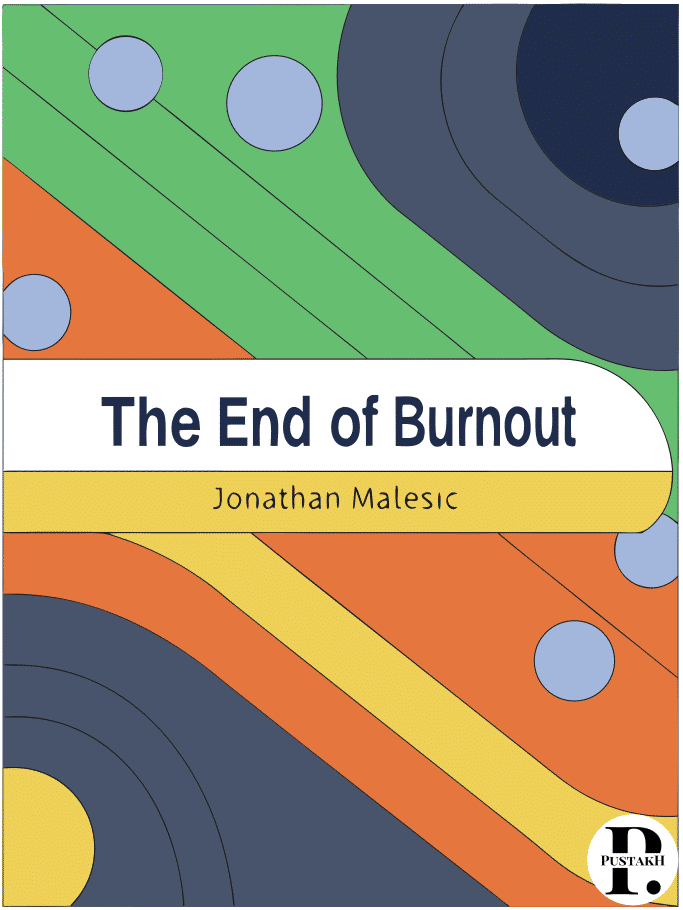
The End of Burnout
by Jonathan Malesic
Why Work Drains Us and How to Build Better Lives
8
Chapters
55+
Action steps
10
Minutes
PERSONALIZED
Action steps tailored to your goals in the Pustakh app
Preview — Chapter 01: Everyone Is Burned Out, But No One Knows What That Means
Burnout is everywhere, yet few people can explain what they actually mean when they say they are burned out. The word is used to describe being busy, bored, overwhelmed, uninspired, or simply tired. This vagueness makes burnout easy to acknowledge and easy to ignore at the same time. When burnout lacks definition, it loses urgency. People assume it is just stress, something that can be solved with a vacation or a long weekend. But burnout runs deeper than fatigue. It carries a sense of depletion that feels moral rather than physical. It feels like giving more than you have and being asked for even more anyway. People experiencing burnout often feel trapped, unable to imagine alternatives without risking security or identity. This confusion serves institutions well. When burnout is framed as individual stress, responsibility never shifts outward. Workers blame themselves for not coping better. Meanwhile, environments that reward overwork, constant availability, and emotional labor remain unchanged. Naming burnout clearly becomes an act of resistance. It allows people to see that their exhaustion is not a private failure, but a shared response to conditions that were never designed with human limits in mind.
Keep reading on PustakhYou've read the opening. Here's where it gets practical.
The remaining 7 chapters, the full audio summary, and 55+ action steps personalized to your goals unlock with a free 3-day trial.
Start free 3-day trialNo credit card required · Cancel anytime
The End of Burnout summary — FAQ
What will I get from the The End of Burnout summary on Pustakh?
The key ideas of "The End of Burnout" by Jonathan Malesic, distilled into a roughly 15-minute read across 8 chapters, plus 55+ personalized action steps built around your goals and an optional audio version.
How long does the The End of Burnout summary take?
About 10 minutes to read the full summary on Pustakh, or you can listen to the audio version.
Does The End of Burnout have an audio summary?
Select Pustakh titles include audio summaries you can play in your browser, and new audio titles are added every week.
Is the The End of Burnout summary free?
You can read the introduction to "The End of Burnout" for free. Full access to every chapter and your personalized action steps is included with a Pustakh subscription. New accounts start with a free 3-day trial — no credit card required.
More Healing & Recovery summaries
View all
Adult Children of Emotionally Immature Parents
by Lindsay C. Gibson
Are You Mad At Me?
by Meg Josephson
Broken Heart, Shared Heart, Healing Heart
by Barbara Allen
Can't Even
by Anne Helen Petersen
Codependent No More
by Melody Beattie
Cured
by Jeffrey Rediger
55+ action steps from The End of Burnout, tailored to your goals in Pustakh
- Tailored to your context and what you are working on
- Personalized steps per chapter, not generic checklists
- Read and listen on your schedule—then act with clarity
- Unlock the full library with a simple subscription
We'll set it up as we learn what you're working on.