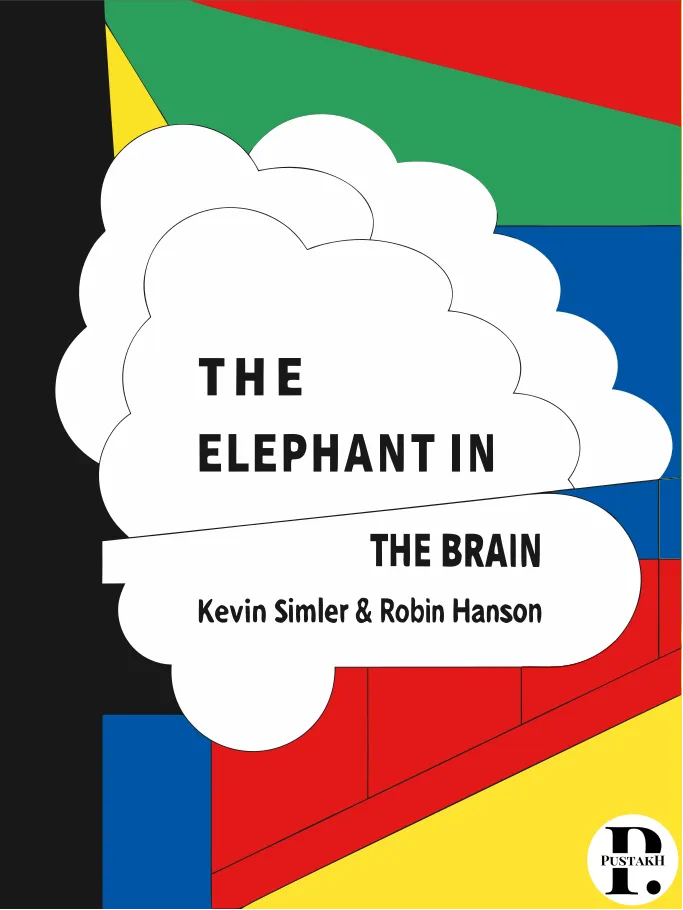
The Elephant in the Brain
by Kevin Simler & Robin Hanson
Hidden Motives in Everyday Life
16
Chapters
130+
Action steps
10
Minutes
PERSONALIZED
Action steps tailored to your goals in the Pustakh app
Preview — Chapter 01: Animal Behavior
Human behavior begins to look very different when viewed through an evolutionary lens. Many social actions resemble patterns seen across the animal kingdom, particularly in signaling, hierarchy, cooperation, and mating. What appears noble or selfless often serves a secondary purpose. Helping, sharing, and sacrificing can function as signals. They communicate strength, intelligence, reliability, or access to resources. Costly actions tend to be the most credible because they are harder to fake. A large portion of behavior exists to send signals rather than solve problems. This perspective explains why people sometimes act in inefficient or exaggerated ways. The behavior is not optimized for utility but for visibility. Being seen doing something admirable can matter more than the practical outcome. Understanding this reduces confusion around seemingly irrational choices. People are not always optimizing outcomes; they are optimizing impressions. Once signaling is recognized, behavior becomes far more predictable. This view does not accuse humans of being shallow. Instead, it reveals that social life runs on layers of communication that operate beneath conscious awareness.
Keep reading on PustakhYou've read the opening. Here's where it gets practical.
The remaining 15 chapters, the full audio summary, and 130+ action steps personalized to your goals unlock with a free 3-day trial.
Start free 3-day trialNo credit card required · Cancel anytime
The Elephant in the Brain summary — FAQ
What will I get from the The Elephant in the Brain summary on Pustakh?
The key ideas of "The Elephant in the Brain" by Kevin Simler & Robin Hanson, distilled into a roughly 15-minute read across 16 chapters, plus 130+ personalized action steps built around your goals and an optional audio version.
How long does the The Elephant in the Brain summary take?
About 10 minutes to read the full summary on Pustakh, or you can listen to the audio version.
Does The Elephant in the Brain have an audio summary?
Select Pustakh titles include audio summaries you can play in your browser, and new audio titles are added every week.
Is the The Elephant in the Brain summary free?
You can read the introduction to "The Elephant in the Brain" for free. Full access to every chapter and your personalized action steps is included with a Pustakh subscription. New accounts start with a free 3-day trial — no credit card required.
More Mindset & Psychology summaries
View all


130+ action steps from The Elephant in the Brain, tailored to your goals in Pustakh
- Tailored to your context and what you are working on
- Personalized steps per chapter, not generic checklists
- Read and listen on your schedule—then act with clarity
- Unlock the full library with a simple subscription
We'll set it up as we learn what you're working on.