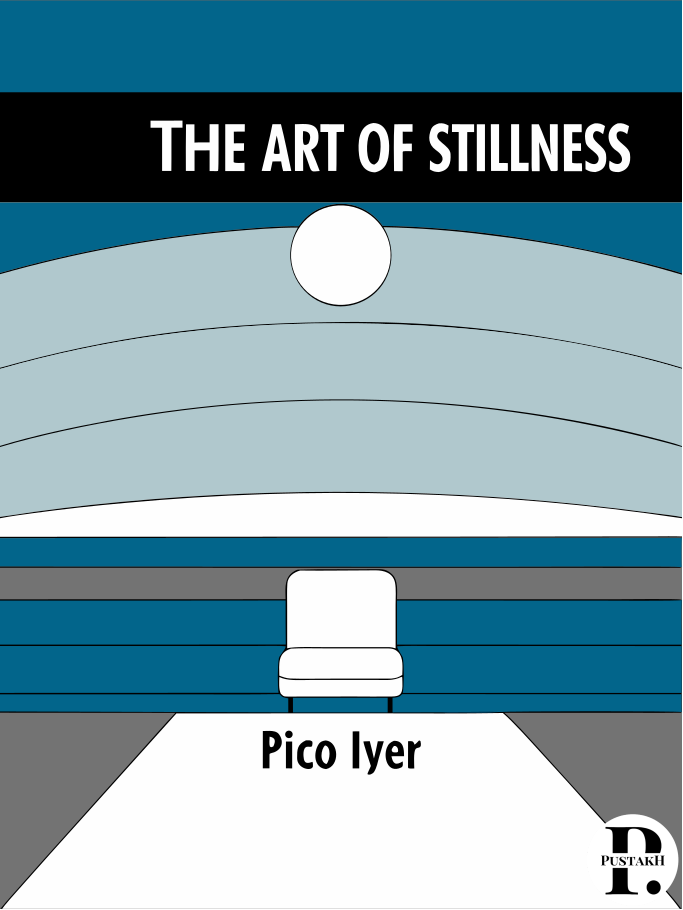
The Art of Stillness
by Pico Iyer
Adventures in Going Nowhere
5
Chapters
44+
Action steps
12
Minutes
PERSONALIZED
Action steps tailored to your goals in the Pustakh app
Preview — Chapter 01: Passage to Nowhere
The idea of movement takes on a surprising twist here. Travel is usually associated with accumulation of experiences, photos, stories, and motion. Yet the focus shifts toward journeys that strip away rather than add. The passage described is not about reaching a destination but about what happens internally when familiar structures are left behind. Physical movement becomes a doorway to inner stillness rather than stimulation. There is a contrast drawn between restless travel and purposeful retreat. Constant hopping from place to place can mirror the same mental clutter found in everyday life. Schedules stay packed, expectations remain high, and the mind never truly arrives anywhere. By contrast, choosing to go somewhere with no agenda creates an unusual freedom. Without a checklist to complete, awareness starts to expand. The surroundings become less about consumption and more about presence. True arrival is shown to be internal rather than geographical. When external demands drop away, the mind begins to notice subtle rhythms that are usually ignored. Time feels different. Moments stretch instead of collapsing into urgency. Even boredom, often avoided at all costs, becomes a gateway to creativity and insight once it is no longer resisted. The passage also explores the discomfort that arises when structure disappears. Without constant activity, restlessness surfaces. Thoughts that were previously buried under busyness come forward. Rather than framing this as failure, the experience is presented as a necessary phase. Stillness does not always feel calm at first. It often reveals how accustomed the mind has become to noise. As the journey unfolds, attention slowly reorients. Instead of scanning for novelty, awareness settles into what is already present. Ordinary details take on richness. Conversations deepen. Silence becomes less threatening and more supportive. What once felt like emptiness begins to feel spacious. The deeper message here is that going nowhere is not dependent on distance. The same internal passage can happen without crossing borders. What matters is the willingness to loosen control and step away from constant input. Travel simply makes this easier by interrupting habits, but the real shift happens when expectations dissolve. By the end, passage to nowhere feels less like an escape and more like a return. It becomes clear that movement is not the opposite of stillness. When approached with intention, it can be the very thing that leads the mind back to quiet, depth, and clarity.
Keep reading on PustakhYou've read the opening. Here's where it gets practical.
The remaining 4 chapters, the full audio summary, and 44+ action steps personalized to your goals unlock with a free 3-day trial.
Start free 3-day trialNo credit card required · Cancel anytime
The Art of Stillness summary — FAQ
What will I get from the The Art of Stillness summary on Pustakh?
The key ideas of "The Art of Stillness" by Pico Iyer, distilled into a roughly 15-minute read across 5 chapters, plus 44+ personalized action steps built around your goals and an optional audio version.
How long does the The Art of Stillness summary take?
About 12 minutes to read the full summary on Pustakh, or you can listen to the audio version.
Does The Art of Stillness have an audio summary?
Select Pustakh titles include audio summaries you can play in your browser, and new audio titles are added every week.
Is the The Art of Stillness summary free?
You can read the introduction to "The Art of Stillness" for free. Full access to every chapter and your personalized action steps is included with a Pustakh subscription. New accounts start with a free 3-day trial — no credit card required.
More Spirituality & Mindfulness summaries
View all


44+ action steps from The Art of Stillness, tailored to your goals in Pustakh
- Tailored to your context and what you are working on
- Personalized steps per chapter, not generic checklists
- Read and listen on your schedule—then act with clarity
- Unlock the full library with a simple subscription
We'll set it up as we learn what you're working on.