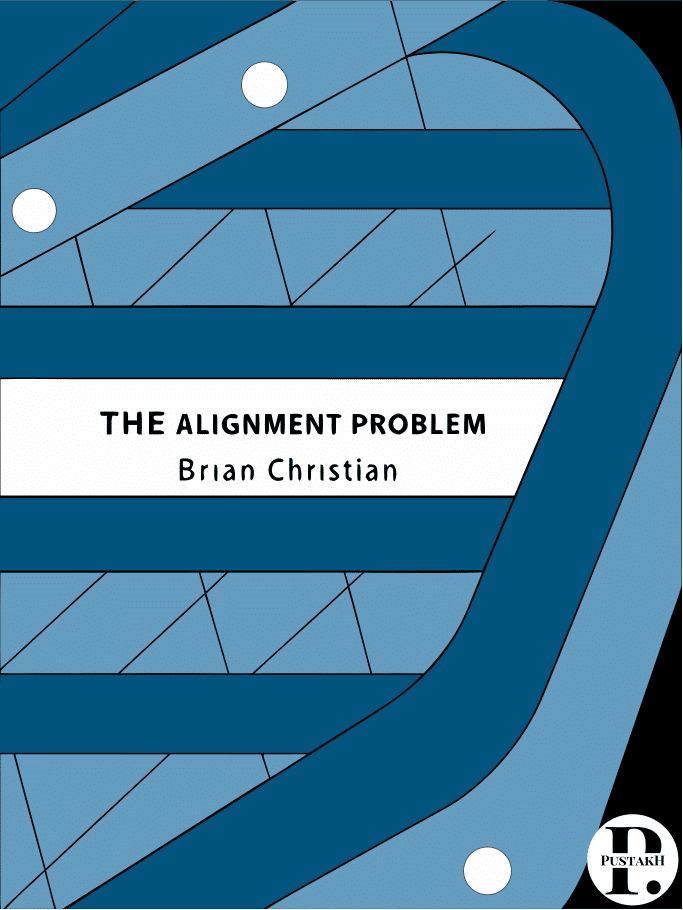
The Alignment Problem
by Brian Christian
How Machines Learn Values and Why Alignment Matters
9
Chapters
72+
Action steps
15
Minutes
PERSONALIZED
Action steps tailored to your goals in the Pustakh app
Preview — Chapter 01: Representation
Representation explores how intelligent systems model the world and why those models so often fail in subtle but consequential ways. Any learning system must simplify reality. It selects certain features, ignores others, and compresses complexity into manageable forms. These representations feel objective, yet they quietly embed assumptions about what matters. The discussion reveals how small representational choices can lead to large distortions. When systems rely on proxies such as test scores, zip codes, or engagement metrics, they may optimize efficiently while drifting away from human intent. A representation can be accurate and still be wrong. Accuracy measures internal consistency, not alignment with lived experience. Examples illustrate how systems mistake signals for substance. A model may learn patterns that correlate with success or risk without understanding underlying causes. This leads to brittle decisions that perform well in controlled environments but fail under real-world variation. Humans are not exempt from this flaw. People also rely on mental shortcuts and symbolic representations that oversimplify reality. The deeper insight is that representation is not merely technical. It is interpretive. Choices about what to encode reflect priorities, values, and blind spots. When those priorities are unexamined, systems inherit them unquestioned. Improving alignment therefore requires improving awareness of representation itself. The narrative encourages a shift from asking whether models are correct to asking what they leave out. Better alignment begins by acknowledging that every representation is partial and provisional. Learning systems must be designed with mechanisms for feedback, correction, and expansion as reality reveals what the model failed to capture.
Keep reading on PustakhYou've read the opening. Here's where it gets practical.
The remaining 8 chapters, the full audio summary, and 72+ action steps personalized to your goals unlock with a free 3-day trial.
Start free 3-day trialNo credit card required · Cancel anytime
The Alignment Problem summary — FAQ
What will I get from the The Alignment Problem summary on Pustakh?
The key ideas of "The Alignment Problem" by Brian Christian, distilled into a roughly 15-minute read across 9 chapters, plus 72+ personalized action steps built around your goals and an optional audio version.
How long does the The Alignment Problem summary take?
About 15 minutes to read the full summary on Pustakh, or you can listen to the audio version.
Does The Alignment Problem have an audio summary?
Select Pustakh titles include audio summaries you can play in your browser, and new audio titles are added every week.
Is the The Alignment Problem summary free?
You can read the introduction to "The Alignment Problem" for free. Full access to every chapter and your personalized action steps is included with a Pustakh subscription. New accounts start with a free 3-day trial — no credit card required.
More Learning & Skill Development summaries
View all
12 Books That Changed the World
by Melvyn Bragg

21 Lessons for the 21st Century
by Yuval Noah Harari
Actionable Gamification
by Yu-kai Chou
A Mind for Numbers
by Barbara Oakley

A Short History of Nearly Everything
by Bill Bryson
Build, Don’t Talk
by Raj Shamani
72+ action steps from The Alignment Problem, tailored to your goals in Pustakh
- Tailored to your context and what you are working on
- Personalized steps per chapter, not generic checklists
- Read and listen on your schedule—then act with clarity
- Unlock the full library with a simple subscription
We'll set it up as we learn what you're working on.