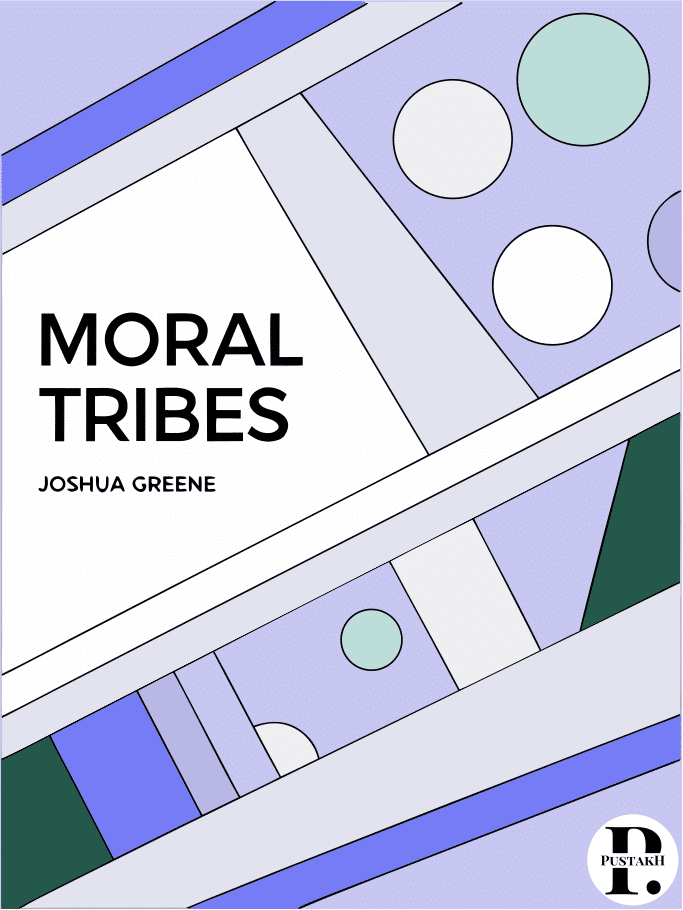
Moral Tribes
by Joshua Greene
Emotion, Reason, and the Gap Between Us and Them
12
Chapters
100+
Action steps
10
Minutes
PERSONALIZED
Action steps tailored to your goals in the Pustakh app
Preview — Chapter 01: The Tragedy of the Commons
Cooperation sounds simple until incentives collide. Shared resources create situations where individual self-interest quietly undermines collective wellbeing. The tragedy emerges not from malice, but from perfectly understandable choices repeated at scale. When everyone benefits from restraint but individuals gain by defecting, systems collapse. Morality evolved to manage these tensions within groups through norms, punishment, and reputation. But these tools weaken as groups grow larger and more anonymous. What feels fair locally can become destructive globally. The tension between individual benefit and group cost explains why moral rules often feel strict. Rules exist not because people are bad, but because temptation is universal. Even well-intentioned individuals can contribute to collective harm when incentives misalign. This dynamic appears everywhere: environmental depletion, public health, economic inequality, and institutional trust. Moral outrage often focuses on individuals while ignoring the structural incentives that make bad outcomes predictable. Understanding the tragedy reframes blame into design. Instead of asking why people fail morally, a more useful question emerges: what systems allow good intentions to scale without collapse?
Keep reading on PustakhYou've read the opening. Here's where it gets practical.
The remaining 11 chapters, the full audio summary, and 100+ action steps personalized to your goals unlock with a free 3-day trial.
Start free 3-day trialNo credit card required · Cancel anytime
Moral Tribes summary — FAQ
What will I get from the Moral Tribes summary on Pustakh?
The key ideas of "Moral Tribes" by Joshua Greene, distilled into a roughly 15-minute read across 12 chapters, plus 100+ personalized action steps built around your goals and an optional audio version.
How long does the Moral Tribes summary take?
About 10 minutes to read the full summary on Pustakh, or you can listen to the audio version.
Does Moral Tribes have an audio summary?
Select Pustakh titles include audio summaries you can play in your browser, and new audio titles are added every week.
Is the Moral Tribes summary free?
You can read the introduction to "Moral Tribes" for free. Full access to every chapter and your personalized action steps is included with a Pustakh subscription. New accounts start with a free 3-day trial — no credit card required.
More Mindset & Psychology summaries
View all

100+ action steps from Moral Tribes, tailored to your goals in Pustakh
- Tailored to your context and what you are working on
- Personalized steps per chapter, not generic checklists
- Read and listen on your schedule—then act with clarity
- Unlock the full library with a simple subscription
We'll set it up as we learn what you're working on.