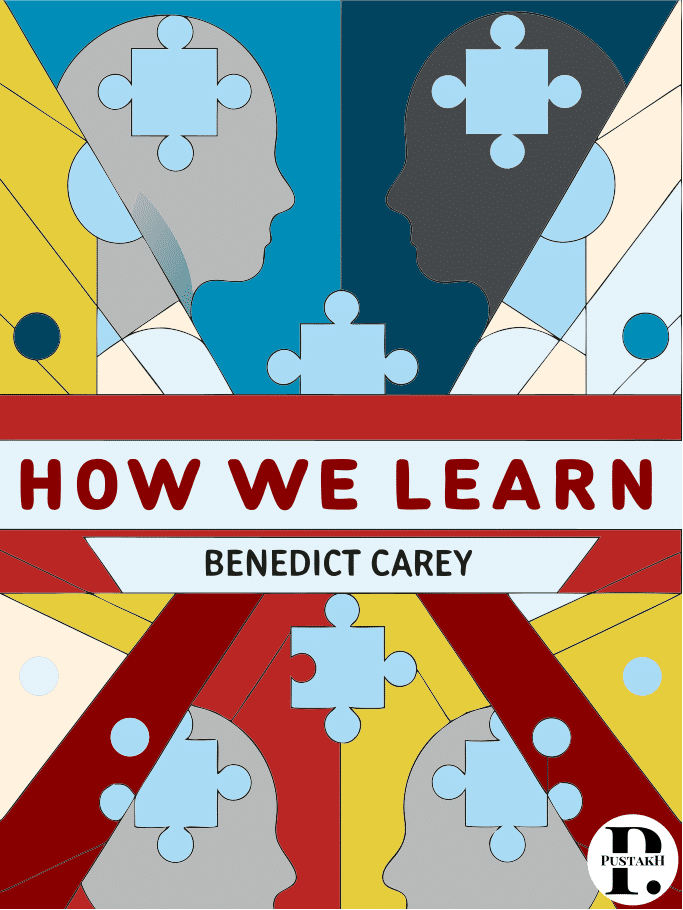
How We Learn
by Benedict Carey
The Surprising Truth About When, Where, and Why It Happens
10
Chapters
68+
Action steps
20
Minutes
PERSONALIZED
Action steps tailored to your goals in the Pustakh app
Preview — Chapter 01: The Story Maker
The brain is a storytelling machine. It doesn’t store facts like a computer - it weaves information into narratives, patterns, and meaning. Memory isn’t a passive system that just collects data. It’s an active processor that connects new knowledge to what already exists in your mind. Let's uncover the biological foundation of memory. At the core is the hippocampus, a brain structure responsible for converting short-term experiences into long-term memories. But the hippocampus doesn’t just record events - it reshapes them, trims details, and files them in ways that make sense. This is why we don’t just remember what happened - we remember what matters. Emotion, novelty, and personal relevance all enhance learning because they signal to the brain: “This is important.” That’s why you can recall a random childhood moment in vivid detail but forget what you read yesterday. The memory wasn’t stored as a fact - it was encoded as a story. Repetition helps, but it’s not enough. Association is everything. The more hooks you give the brain - through visuals, metaphors, movement, or emotion - the more likely it is to retrieve that information later. What this means is that learning improves when it becomes meaningful and contextual. The brain favors depth over rote. It links new input to prior experience and creates a mental map that’s shaped more by relevance than accuracy. Even imagination plays a role. Just thinking about something as a sequence or story strengthens memory formation. The brain doesn't care if it’s fiction or fact - it remembers what it understands. To learn better, feed your brain what it loves: connection, context, novelty, and narrative.
Keep reading on PustakhYou've read the opening. Here's where it gets practical.
The remaining 9 chapters, the full audio summary, and 68+ action steps personalized to your goals unlock with a free 3-day trial.
Start free 3-day trialNo credit card required · Cancel anytime
How We Learn summary — FAQ
What will I get from the How We Learn summary on Pustakh?
The key ideas of "How We Learn" by Benedict Carey, distilled into a roughly 15-minute read across 10 chapters, plus 68+ personalized action steps built around your goals and an optional audio version.
How long does the How We Learn summary take?
About 20 minutes to read the full summary on Pustakh, or you can listen to the audio version.
Does How We Learn have an audio summary?
Select Pustakh titles include audio summaries you can play in your browser, and new audio titles are added every week.
Is the How We Learn summary free?
You can read the introduction to "How We Learn" for free. Full access to every chapter and your personalized action steps is included with a Pustakh subscription. New accounts start with a free 3-day trial — no credit card required.
More Learning & Skill Development summaries
View all
12 Books That Changed the World
by Melvyn Bragg
21 Lessons for the 21st Century
by Yuval Noah Harari
Actionable Gamification
by Yu-kai Chou
A Mind for Numbers
by Barbara Oakley
A Short History of Nearly Everything
by Bill Bryson
Build, Don’t Talk
by Raj Shamani
68+ action steps from How We Learn, tailored to your goals in Pustakh
- Tailored to your context and what you are working on
- Personalized steps per chapter, not generic checklists
- Read and listen on your schedule—then act with clarity
- Unlock the full library with a simple subscription
We'll set it up as we learn what you're working on.