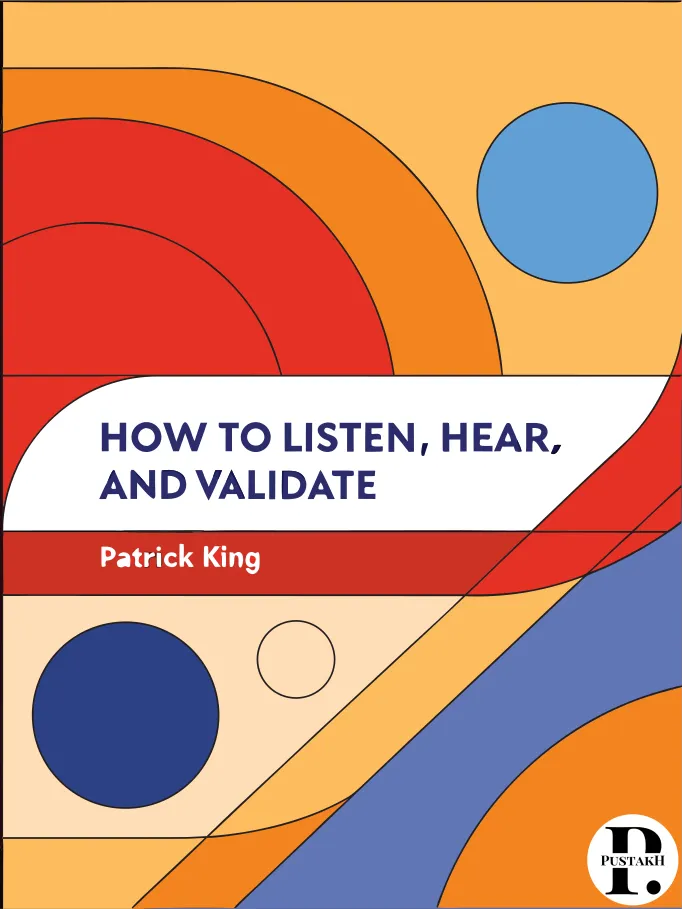
How to Listen, Hear, and Validate
by Patrick King
Break Through Invisible Barriers and Transform Your Relationships
6
Chapters
48+
Action steps
8
Minutes
PERSONALIZED
Action steps tailored to your goals in the Pustakh app
Preview — Chapter 01: Validation as a Communication Skill
Validation is introduced here as one of the clearest ways to communicate care. When someone feels validated, they experience acceptance rather than judgment. This acceptance does not require agreement, approval, or solutions. It requires recognition. A key distinction is made between empathy and validation. Empathy involves understanding emotion internally, while validation communicates that understanding outwardly. Empathy felt but not expressed still leaves people feeling unseen. Validation is framed as an active process. It involves listening closely, reflecting accurately, and responding with language that acknowledges emotional experience. Even small moments of validation can shift the direction of a conversation dramatically. The text also addresses common fears around validation. Many people worry that validating emotion will reinforce negativity or encourage weakness. This fear is gently dismantled. Validation does not intensify emotion; it often reduces it by removing the need to defend or explain. The deeper message here is relational safety. When people feel validated, they become more open, flexible, and willing to engage. Validation is not manipulation. It is the groundwork for honest, respectful communication.
Keep reading on PustakhYou've read the opening. Here's where it gets practical.
The remaining 5 chapters, the full audio summary, and 48+ action steps personalized to your goals unlock with a free 3-day trial.
Start free 3-day trialNo credit card required · Cancel anytime
How to Listen, Hear, and Validate summary — FAQ
What will I get from the How to Listen, Hear, and Validate summary on Pustakh?
The key ideas of "How to Listen, Hear, and Validate" by Patrick King, distilled into a roughly 15-minute read across 6 chapters, plus 48+ personalized action steps built around your goals and an optional audio version.
How long does the How to Listen, Hear, and Validate summary take?
About 8 minutes to read the full summary on Pustakh, or you can listen to the audio version.
Does How to Listen, Hear, and Validate have an audio summary?
Select Pustakh titles include audio summaries you can play in your browser, and new audio titles are added every week.
Is the How to Listen, Hear, and Validate summary free?
You can read the introduction to "How to Listen, Hear, and Validate" for free. Full access to every chapter and your personalized action steps is included with a Pustakh subscription. New accounts start with a free 3-day trial — no credit card required.
More Relationships & Social Skills summaries
View all


48+ action steps from How to Listen, Hear, and Validate, tailored to your goals in Pustakh
- Tailored to your context and what you are working on
- Personalized steps per chapter, not generic checklists
- Read and listen on your schedule—then act with clarity
- Unlock the full library with a simple subscription
We'll set it up as we learn what you're working on.