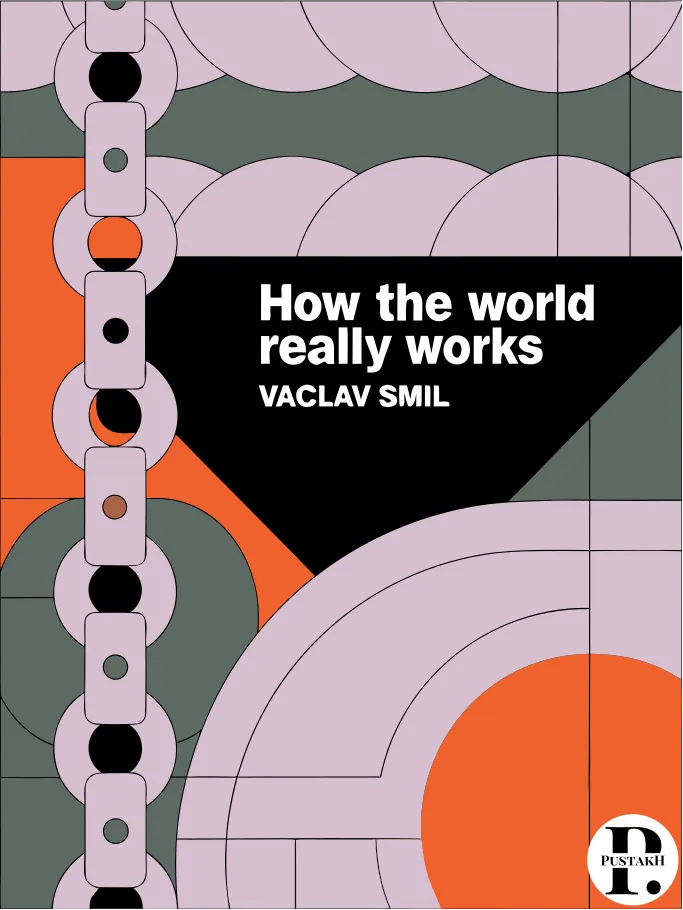
How the World Really Works
by Vaclav Smil
A Scientist's Guide to Our Past, Present, and Future
7
Chapters
54+
Action steps
8
Minutes
PERSONALIZED
Action steps tailored to your goals in the Pustakh app
Preview — Chapter 01: Understanding Energy
Energy sits at the center of everything modern life depends on. Transportation, heating, manufacturing, and food production all rely on vast, continuous energy flows. This exploration begins by stripping away slogans and focusing on quantities, densities, and reliability. Energy is not just about sources, but about scale and substitution. A society built on high-density fuels cannot be transformed overnight without consequences. One of the most important ideas here is energy density. Fossil fuels pack enormous amounts of usable power into small volumes, which is why they became dominant. Alternatives face challenges not because of ideology, but because of physics. Low-density sources require more land, more materials, and more infrastructure. Ignoring these realities leads to unrealistic expectations about speed and ease of transition. This perspective reframes the energy debate. The question is not whether change is desirable, but how it can happen within real constraints. Understanding energy means accepting trade-offs, delays, and partial solutions. Once these limits are acknowledged, planning becomes more serious and less performative. Progress shifts from slogans to systems.
Keep reading on PustakhYou've read the opening. Here's where it gets practical.
The remaining 6 chapters, the full audio summary, and 54+ action steps personalized to your goals unlock with a free 3-day trial.
Start free 3-day trialNo credit card required · Cancel anytime
How the World Really Works summary — FAQ
What will I get from the How the World Really Works summary on Pustakh?
The key ideas of "How the World Really Works" by Vaclav Smil, distilled into a roughly 15-minute read across 7 chapters, plus 54+ personalized action steps built around your goals and an optional audio version.
How long does the How the World Really Works summary take?
About 8 minutes to read the full summary on Pustakh, or you can listen to the audio version.
Does How the World Really Works have an audio summary?
Select Pustakh titles include audio summaries you can play in your browser, and new audio titles are added every week.
Is the How the World Really Works summary free?
You can read the introduction to "How the World Really Works" for free. Full access to every chapter and your personalized action steps is included with a Pustakh subscription. New accounts start with a free 3-day trial — no credit card required.
More Learning & Skill Development summaries
View all
12 Books That Changed the World
by Melvyn Bragg
21 Lessons for the 21st Century
by Yuval Noah Harari

Actionable Gamification
by Yu-kai Chou
A Mind for Numbers
by Barbara Oakley
A Short History of Nearly Everything
by Bill Bryson
Build, Don’t Talk
by Raj Shamani
54+ action steps from How the World Really Works, tailored to your goals in Pustakh
- Tailored to your context and what you are working on
- Personalized steps per chapter, not generic checklists
- Read and listen on your schedule—then act with clarity
- Unlock the full library with a simple subscription
We'll set it up as we learn what you're working on.