
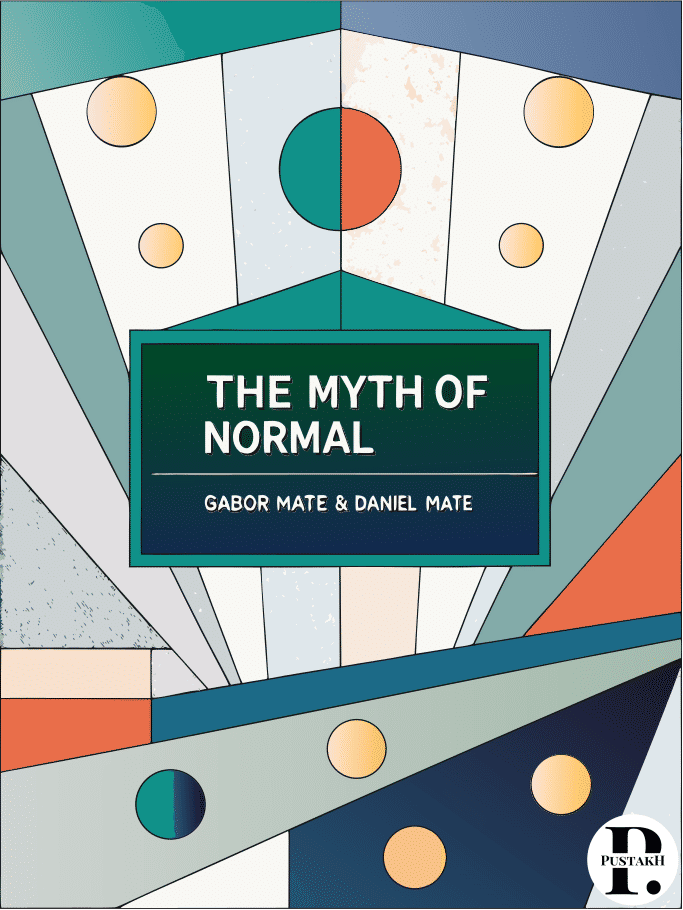
The Myth of Normal
by Gabor Maté & Daniel Maté
Trauma, Illness & Healing in a Toxic Culture
5
Chapters
42+
Action steps
10
Minutes
AI PERSONALISED
Action steps tailored to your goals in the Pustakh app
Preview — Chapter 01: Our Interconnected Nature
Human beings often believe they make decisions independently, yet so much of what you feel, think, and react to is shaped by the connections around you. Emotional experiences ripple through your nervous system long before you can articulate what’s happening. As you look more closely at the way interactions imprint themselves on your mind and body, you begin seeing that you have never lived outside of relationship—even in moments that felt solitary. The patterns of your emotional life reveal themselves: how your body tenses when someone is upset, how your tone shifts in response to another’s stress, how your heart steadies around people who make you feel safe. These signals demonstrate the deep biological wiring humans carry—a wiring designed for connection, attunement, and shared emotional energy. When these needs are met, you thrive. When they’re not, stress begins to build in unexpected ways. You start noticing how easily the world teaches people to disconnect from themselves. The pressure to be self-reliant often masks genuine emotional needs. The expectation to stay composed hides the truth that your body is constantly responding to unspoken cues. Once you understand how profoundly interconnected humans are, everything from stress reactions to relational conflict begins to make more sense. There’s a growing awareness of how loneliness, even subtle forms of it, affects health. Feeling unseen or misunderstood doesn’t just hurt—it shapes your physiology. The body responds to lack of emotional connection the same way it responds to danger. You realize that emotional isolation is not a personality trait; it’s an experience that impacts every system in the body. As the insights settle, you gain clarity about why certain environments make you feel alive while others drain you. You start understanding that emotional safety isn’t optional; it’s essential. And for perhaps the first time, you see your sensitivity, your reactions, your emotional intensity—not as weaknesses—but as evidence of your deeply relational nature.
Keep reading in Pustakh42+ action steps from The Myth of Normal, tailored to your goals in Pustakh
- Tailored to your context and what you are working on
- AI-generated steps per chapter, not generic checklists
- Read and listen on your schedule—then act with clarity
- Unlock the full library with a simple subscription
Cancel anytime in one click.