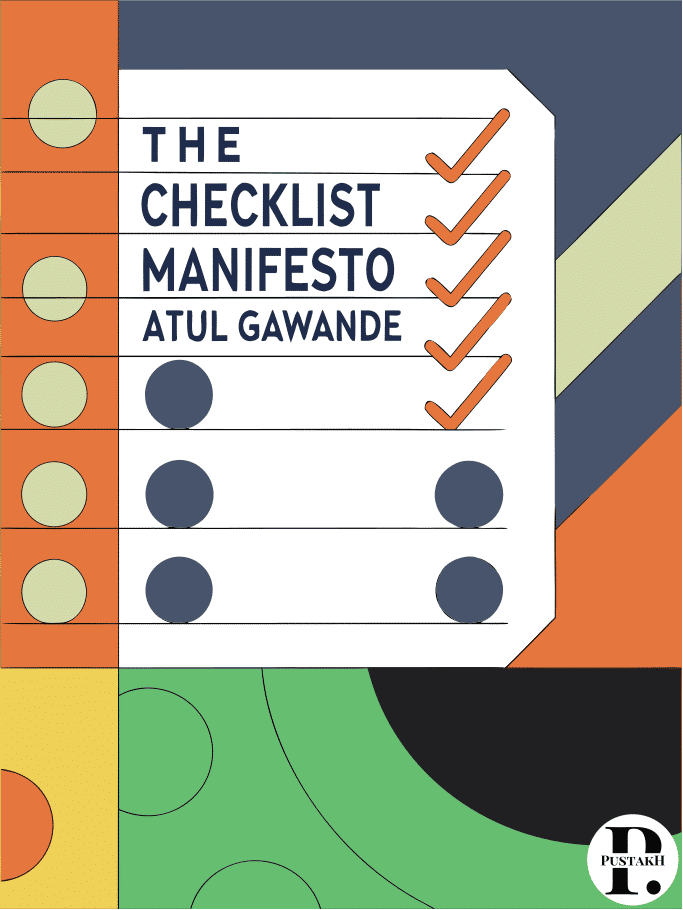
The Checklist Manifesto
by Atul Gawande
How to Get Things Right
9
Chapters
59+
Action steps
18
Minutes
AI PERSONALISED
Action steps tailored to your goals in the Pustakh app
Preview — Chapter 01: The Problem of Extreme Complexity
Across industries, the sheer scale of complexity creates situations where traditional methods of working no longer suffice. Medicine offers an especially vivid example: decades ago, treating illness often involved a handful of straightforward remedies, while today doctors must juggle dozens of drugs, devices, and procedures even for a single patient. The increase in specialization, while expanding human capability, has also multiplied the risk of oversight. The same pattern plays out in construction, finance, and emergency response. Where once one master figure might oversee everything, now hundreds of specialists must coordinate seamlessly. But when responsibilities splinter across so many hands, cracks form, and important steps are easily missed. The paradox of modern expertise is that the more knowledge we acquire, the more fragile our ability to manage it becomes. Professionals cannot simply “know everything.” No individual can retain or recall every detail on demand. The result is a new vulnerability—errors not born from ignorance but from overload. A surgeon might forget to check a single lab value; an engineer might miss a calculation in a sea of data; a financial analyst might overlook one clause buried in a contract. These are not failures of competence but failures of process. The lesson drawn here is that complexity itself must be managed with tools designed for it. Training more, studying harder, or hiring smarter people cannot fully solve the problem. What is needed is a framework that ensures the essentials are not lost in the chaos. The checklist emerges as that framework: a way to distill complexity into manageable steps without diminishing sophistication. It captures the minimum critical actions that must always be completed, regardless of context or stress level. In this sense, the checklist acts as both a safety net and a compass, preventing teams from drifting into dangerous gaps. The problem of extreme complexity is not going away—in fact, it will only grow. Recognizing this is the first step toward embracing tools that protect us from its pitfalls. The checklist, simple as it seems, is presented as a response that matches the scale of the challenge.
Keep reading in Pustakh59+ action steps from The Checklist Manifesto, tailored to your goals in Pustakh
- Tailored to your context and what you are working on
- AI-generated steps per chapter, not generic checklists
- Read and listen on your schedule—then act with clarity
- Unlock the full library with a simple subscription
Cancel anytime in one click.